Legiones Astartes – Konrad Curze

Called the ‘Night Haunter’ by the people of his home world of Nostramo, Konrad Curze was from his earliest days a figure of dark renown. Instituting a reign of terror that cowed criminal and tyrant alike, the Night Haunter brought order, of a kind, to Nostramo. When at last the Emperor came, Curze had foreseen his life, his role as Primarch and his ultimate end, his sanity’ ever stretched taut by grim visions of the horrors soon to overwhelm the galaxy. Having been granted command of the VIIIth Legion, which the Primarch named the Night Lords, Curze set about imposing his particular notions of order and justice upon the wider galaxy. At the urging of his brother, the Warmaster, Curze would throw in his lot with the Traitors, his cruel ire now directed against his own brothers and their Legions.
| LD | CL | WP | IN | |||||||||||
| M | WS | BS | S | T | W | I | A | LD | CL | WP | IN | SAV | INV | |
| Konrad Curze (⌀40mm) | 12 | 10 | 8 | 10 | ||||||||||
| Konrad Curze (⌀40mm) | 8 | 7 | 7 | 6 | 6 | 6 | 7 | 6 | 12 | 10 | 8 | 10 | 2+ | 4+ |
- Mercy and Forgiveness
- The Widowmakers
- Traitor
- Night Lords
- Master of the Legion
- Sire of the Night Lords
- Bulky (4)
- A Death Long Foreseen
- Fear (2)
- Eternal Warrior (2)
- Paragon (Unique)
Mercy and Forgiveness
This pair of murderous artificer lightning claws, unknown in origin, which Curze favoured as his personal weapons, were given the doleful names ‘Mercy’ and ‘Forgiveness’ by the Night Lords; though what their wielder named them, if anything, remains as with so much about their master, unknown.
| Melee Weapon | |||||||
Melee Weapon | IM | AM | SM | AP | D | Special Rules | Traits |
| Mercy and Forgiveness | |||||||
| Mercy and Forgiveness | I | +2 | S | 2 | 1 | Critical Hit (5+), Shred (4+) | Power |
The Widowmakers
Based on the micro-serrated throwing blades utilised for signature kills by certain Nostraman assassin-cults, Curze favoured the use of these vicious, yet highly precise, weapons over more conventional firearms in battle, using them to disable and maim as he willed.
| Ranged Weapon | |||||||
Ranged Weapon | R | FP | RS | AP | D | Special Rules | Traits |
| The Widowmakers | |||||||
| The Widowmakers | 12 | 3 | 4 | 5 | 1 | Breaching (4+) | Assault |
Sire of the Night Lords
A dark and haunted figure obsessed with death and judgement, unshakable in his belief in the fundamental fallibility of Mankind and the agency of fear as the only true means of controlling humanity’s failings, Konrad Curze and his Legion were shaped by the darkness of Nostramo just as much as they were by the genecraft of the Emperor, waiting in the shadows, ready to strike.
If a Model with this Special Rule is part of an Army, then the Controlling Player may apply the following additional Special Rules to all Auxiliary, Apex and Primary Detachments that have the same Faction Trait as the Model with this Special Rule:- If four or more Troops Battlefield Role Slots in the Primary Detachment of this Army are filled with Terror Squad Units and/or Assault Squad Units, then all Force Organisation Slots with the Troops Battlefield Role in the Primary Detachment are considered Prime Slots.
Furthermore, if a Model with this Special Rule is part of an Army, then the following Special Rules are granted to all Models in Terror Squad Units in the same Army:
- All Models in Terror Squad Units in this Army gain the Infiltrate (12) Special Rule.
A Death Long Foreseen
Konrad Curze was cursed with one tiny sliver of his father’s psychic talent - he could foresee snatches of the future with limited clarity, though his control over when these visions came to him was tenuous at best.
If the Controlling Player succeeds at a Dice Roll, they may select this Gambit instead of any others normally available.When selecting Gambits for a Model with this Special Rule, its Controlling Player can roll one Dice. On a 5+, this Gambit is available to the Controlling Player to be selected for that Model:
A Death Long Foreseen
An empire in flames, a throne in a palace of nightmares and a shadowy figure wreathed in righteous anger. It all ends in horror and a short, undignified stroke of a blade. What terror can the battlefields of the present hold compared to the empty futility of the future?
When this Gambit is selected, the Controlling Player can make one Willpower Check for each of the following benefits. If the Willpower Check is successful, the corresponding effect applies until the start of the next Face-Off Step:- This Model has the Feel No Pain (5+) Special Rule.
- Modify this Model’s Attacks Characteristic by +1.
- This Model’s Mercy and Forgiveness have an Initiative Modifier Characteristic of ‘+2’.
Every Army must include a single Primary Detachment - and may never include more than one. Each High Command Force Organisation Slot filled in the Primary Detachment allows the Controlling Player to select one Apex or Auxiliary Detachment to be added to the Army. Likewise, each Command Force Organisation Slot filled in the Primary Detachment allows the Controlling Player to select one Auxiliary Detachment to be added to the Army. If multiple Command Force Organisation Slots are filled, then multiple Auxiliary Detachments may be added to the Army - these may be multiple instances of the same Auxiliary Detachment or different Auxiliary Detachments as the Player desires. Apex and Auxiliary Detachments added to the Army in this manner are linked to the Primary Detachment and must use the same Army List to select any Units that are selected to fill Force Organisation Slots in those Detachments. Players may choose not to add additional Detachments when eligible to do so.
Among the warriors and war machines of the Horus Heresy there are many whose names are known throughout the galaxy. Such heroes, prototypes and icons are rare, and though their power can tip any battle in their favour, they can only be in one place at a time.
The following Rules apply to all Models with the Unique Sub-Type:- An Army may not include more than a single instance of a given Model with this Sub-Type. For example, if Model A and Model B both have the Unique Sub-Type then a single Army could include one of Model A and one of Model B, but no more than one of either Model.
- A Model with the Unique Sub-Type or a Unit composed entirely of Models with the Unique Sub-Type may not have any options other than those included on its Army List Profile selected for them.
An Army may include any number of Apex Detachments. The number available in any Army is determined by the number of High Command Force Organisation Slots that have been filled, with each such Slot filled allowing a single Apex Detachment to be taken. Any High Command Force Organisation Slots that were optionally used to include an additional Auxiliary Detachment in the Army do not also allow an Apex Detachment to be included - for each High Command Slot the Controlling Player may include one Apex Detachment or one Auxiliary Detachment, not both. All Apex Detachments are linked to other Detachments, usually Primary Detachments, which determines which Army List and Faction must be used by the Apex Detachment. Each High Command Force Organisation Slot filled in an Apex Detachment allows the Controlling Player to select an additional Apex Detachment or Auxiliary Detachment to be linked to the Primary Detachment. Furthermore, each Command Force Organisation Slot filled in an Apex Detachment allows the Controlling Player to select an additional Auxiliary Detachment to be linked to the Primary Detachment.
An Army may include any number of Auxiliary Detachments. The number available in any Army is determined by the number of Command Force Organisation Slots that have been filled, with each such Slot filled allowing a single Auxiliary Detachment to be taken. A Player may also choose to include an Auxiliary Detachment for one or more of the High Command Force Organisation Slots available to them, gaining one Auxiliary Detachment for each High Command Slot selected, but any High Command Slots selected in this manner no longer grant the Player an Apex Detachment. All Auxiliary Detachments are linked to other Detachments, usually either Primary or Allied Detachments, which determines which Army List and Faction must be used by the Auxiliary Detachment.
Whether by dint of superior skill or exemplary wargear, some warriors are better able to place strikes on enemy weak points. Such attacks can fell even the most powerful foes with a single well-placed shot.
Attacks made with the Critical Hit (X) Special Rule have a chance to automatically cause a wound and inflict 1 extra point of Damage.When any Hit Test is made for an attack with the Critical Hit (X) Special Rule, if the result of the Dice roll, before any modifiers are applied, is equal to or greater than the value of X attached to this variant of the Critical Hit (X) Special Rule, then if a Hit is inflicted by that Hit Test, that Hit becomes a ‘Critical Hit’.
A Critical Hit automatically inflicts a wound without any Dice being rolled, counting as the roll of a ‘6’ for any variable Special Rules that might be triggered by a Wound Test, and increases the Damage Characteristic of the Hit by +1.
For example, a Legionary selected from the Imperial Fists Faction and selected as part of a Loyalist Army would have the Loyalist and Imperial Fists Traits. On their own these Traits have no effect on the Model’s Characteristics, Points cost or other features, but Rules that target Imperial Fists or Loyalist Models will apply their effects to the Model.
In addition to Models, Weapons can also have Traits. These are usually different to those possessed by Models, but are used for the same purposes. Weapons will commonly have Traits that define the type of Weapon it is or a specific type of usage. For example, a bolt pistol has the following Traits: Assault, Bolt. These identify which ‘family’ of Weapons it belongs to for any Rules that might only affect ‘Bolt’ Weapons and notes that it can be used for attacks where only ‘Assault’ Weapons may be used.
While they appear similar to Characteristics, it is important to note that Traits never have a ‘value’ attached to them. Furthermore, Traits cannot be modified in any way by another Special Rule or effect during a Battle, unless a Rule specifically states it affects a Trait.
Designed to pierce the armour worn by heavy infantry, some weapons have gained a fearsome reputation on the battlefields of the Horus Heresy. While many such weapons are rare or temperamental in use, the sheer power of their attacks more than makes up for this.
With a Weapon that has the Breaching (X) Special Rule there is a chance that a Wound Test may result in the Wound ignoring Armour Saves.When any Wound Test is made for an attack with the Breaching (X) Special Rule, if the result of the Dice roll, before any modifiers are applied, is equal to or greater than the value of X attached to this variant of the Breaching (X) Special Rule, then if a wound is inflicted by that Wound Test, that wound becomes a ‘Breaching Wound’.
A Breaching Wound is always treated as having an AP Characteristic of 2 regardless of the Characteristics of the Weapon used to make the attack.
Mightiest of all the Emperor’s creations and the greatest warriors and generals of their age, the Primarchs of the Space Marine Legions epitomise the dark ages of the Horus Heresy. These colossi of war were powerful beyond the capabilities of any mortal warrior or steel-forged automata - for their only equal was another of their own kind.
The following Rules apply to all Models with the Paragon Type:- Any Hits inflicted by a Model with the Paragon Type, as part of either Shooting Attacks or in close combat, are allocated by the attacking Model’s Controlling Player and not the Controlling Player of the Target Unit.
- Models with the Paragon Type may join and leave a Unit that includes Models with the Infantry Type, and Models with the Infantry Type may join and leave a Unit that includes one or more Models with the Paragon Type.
- Models with the Paragon Type may Embark and Disembark upon Models with the Transport Sub-Type.
- A Model with the Paragon Type may Issue and Accept Challenges.
- The Controlling Player of a Unit that includes one or more Models with the Paragon Type may use the Characteristics of one of those Models to resolve any Characteristic Checks made for that Unit.
- In Step 1 of the Resolution Sub-Phase, when deciding how many Models a Player controls in a Combat, a Model with the Paragon Type counts as a number of Models equal to that Model’s Base Wounds Value.
Designed to rip and tear flesh, some weapons are fearsome and intimidating tools of warfare. Whether by the gnashing teeth of a chainblade or the jagged edges of flechette ammunition, these weapons scythe great holes in the lines of even the toughest of infantry and the largest of warriors.
Attacks made with the Shred (X) Special Rule can sometimes inflict an extra point of Damage.When any Wound Test is made for an attack with the Shred (X) Special Rule, if the result of the Dice roll, before any modifiers are applied, is equal to or greater than the value of X attached to this variant of the Shred (X) Special Rule, then if a wound is inflicted by that Wound Test, the Damage Characteristic of that wound is increased by 1. Note that the Shred (X) Special Rule may only be triggered by a Wound Test and has no effect when making an Armour Penetration Test.
Some warriors exude such a terrifying aura that even those hardened by war and death are apprehensive in their presence. Whether this is due to a reputation for cruelty or brutal slaughter or the result of some technological device or psychic glamour makes little difference in the effect it has on the battlefield. Wise commanders will seek to keep their distance and engage such fearsome enemies at range rather than risk their wrath.
Models near an enemy Model with the Fear (X) Special Rule must reduce their Advanced Characteristics.When any Model from a Unit is within 12" of an enemy Model with the Fear (X) Special Rule, all Models in that Unit must reduce their Leadership, Willpower, Cool and Intelligence Characteristics by the value of X. This negative modifier is removed as soon as no Models in a given Unit are within 12" of any Model with the Fear (X) Special Rule. If a Unit would be affected by multiple instances of the Fear (X) Special Rule, the value of X is not stacked and instead the single highest value is used as a negative modifier.
If a Rule calls for a modifier to be applied to a Characteristic that has already been modified, then that modifier is applied to the Current Value, not the Base Value. Modifiers that add or subtract a fixed value to the Characteristic do so to the Current Value and modifiers that multiply or divide the Characteristic multiply or divide the Current Value. Where multiple modifiers are applied to a Characteristic at the same time, any modifiers that multiply the Characteristic and/or modifiers that divide the Characteristic are applied first, then any modifiers that add to or subtract from the Characteristic are applied last.
Where any Rules call for multiple modifiers of different kinds to be applied to a value, they are always applied in the following order: multiplication then division, then addition and finally subtraction.
Some modifiers may simply ‘set’ the Current Value of a Characteristic to a specific value instead of modifying the Current Value or Base Value. Such modifiers override all other modifiers and are always applied last, replacing the modified Current Value with the set value.
For example, a Model’s Strength Characteristic has a Base Value of 4 on its Unit Profile.
- If this Characteristic has a modifier of ‘+1’ applied to it, its Current Value would become 5.
- If it had modifiers of both ‘+3’ and ‘-1’ applied to it then its Current Value would be 6.
- If it had a modifier of ‘x2’ applied to it then its Current Value would be 8.
- If it had a modifier of ‘x2’ and ‘+1’ applied to it then its Current Value would be 9.
- If a modifier set its value to ‘2’, then its Current Value would be 2.
- If it had a modifier of ‘x2’ and ‘+1’ applied to it and another modifier also set its value to ‘2’, then its Current Value would be 2.
Some warriors are so inured to pain and suffering that nothing but the most grievous of hurts will slow their onslaught. The only way to stop such a berserk is to hit them again and again until at last they fall, the toll of their hurts far more than any mortal warrior should be capable of bearing.
Feel No Pain (X) is a Damage Mitigation Test that may be taken in addition to a Saving Throw.A Model with the Feel No Pain (X) Special Rule gains a Feel No Pain Damage Mitigation Test that may be used in Step 9 of the Shooting Attack process or Step 8 of the Initiative Step of the Fight Sub-Phase process to discard wounds allocated to the Model. A Damage Mitigation Test may be made after and in addition to a Saving Throw. The Target Number for a Feel No Pain Damage Mitigation Test is the value of X attached to the specific variant of the Special Rule.
| TROOPS – The line troops that hold ground and allow generals to claim victory. |
Some warriors are either so preternaturally tough, so bitterly intransigent or so favoured by fortune that they can survive almost any attack. Devastating close combat strikes and huge explosions all fail to bring down this warrior in a single hit and only repeated attacks can end their rampage.
A Model with this Special Rule takes less Damage from attacks.When a Model with the Eternal Warrior (X) Special Rule is allocated an Unsaved Wound, the Damage of the Unsaved Wound is reduced by the value of X attached to the specific variant of the Eternal Warrior (X) Special Rule. The effects of this Special Rule cannot reduce the Damage of an Unsaved Wound to less than 1, regardless of the value of X.
When a Characteristic Check is made for an individual Model, then the Target Number for the Check is always equal to the value of the Characteristic of the same name possessed by the Model. For example, the Target Number of a Willpower Check made for a Model with Willpower 7 would be 7.
When a Characteristic Check is made for a Unit rather than an individual Model, the Target Number for the Check is equal to the value of the Characteristic of the same name possessed by the Model with the lowest Characteristic of the same name in the Unit. For example, the Target Number of a Leadership Check made for a Unit that includes Models with Leadership Characteristics of 6, 8 and 10 would be 6 - the lowest of the available Characteristic values. Note that if the Unit includes a Model with the Sergeant or Command Sub-Types then that Model’s Characteristic may always be used instead of any other Model’s.
In most cases if a Check is passed then there is no further effect, while failure will often result in the Model for which the Check is made being affected by the Rule which called for the Check. Unlike Tests, Checks must be rolled one at a time and should not be rolled in batches in order to avoid confusion over which Dice refer to which Check.
Transport vehicles are designed to balance armour and capacity, attempting to mount the most protection without compromising how many warriors they can carry. Yet, some warriors are plated in such imposing armour or even spawned in such an aberrant nature that they occupy far more space than any regular fighter. Such warriors are mighty in both power and stature, but prove more difficult to ferry into battle.
Models with the Bulky (X) Special Rule take up more space on Transport Models.A Model with the Bulky (X) Special Rule does not use up 1 Point of Transport Capacity when it Embarks on a Model with the Transport Sub-Type. Instead it uses up a number of points of Transport Capacity equal to the value of X attached to the variant of the Bulky (X) possessed by that Model.


This datasheet has Warlord Battlefield Role. Full list of Legiones Astartes units sharing same Battlefield Role follows:
The Master of the Legion Trait is used in the following Legiones Astartes datasheets:

Some warriors are skilled at infiltrating enemy lines. When battle commences the foe will find such warriors almost upon them, ready to fight even before the first shot is fired.
Models with the Infiltrate (X) Special Rule can deploy outside of their Deployment Zone.At the start of a Mission, when deploying Units, the Controlling Player of a Unit that is composed entirely of Models with the Infiltrate (X) Special Rule may choose to deploy that Unit outside of that Player’s Deployment Zone. That Unit may be deployed anywhere that is either in the Controlling Player’s Deployment Zone or outside of the Opposing Player’s Deployment Zone and is at least a number of inches equal to the highest value of X attached to any variant of the Infiltrate (X) Special Rule in that Unit away from any enemy Model.
Units deployed using the Infiltrate (X) Special Rule are deployed at the same time as other Units under a Player’s control, unless the specific Rules of a given Mission state otherwise. The Infiltrate (X) Special Rule only has an effect when deploying Units before the start of the First Turn of a Battle, and Units deploying onto the Battlefield after the First Turn has begun gain no benefit from this Special Rule. A Unit that is deployed outside of the Controlling Player’s Deployment Zone by means of this Special Rule may not have a Charge declared for it in the First Battle Turn.
The Traitor Trait is used in the following Legiones Astartes datasheets:
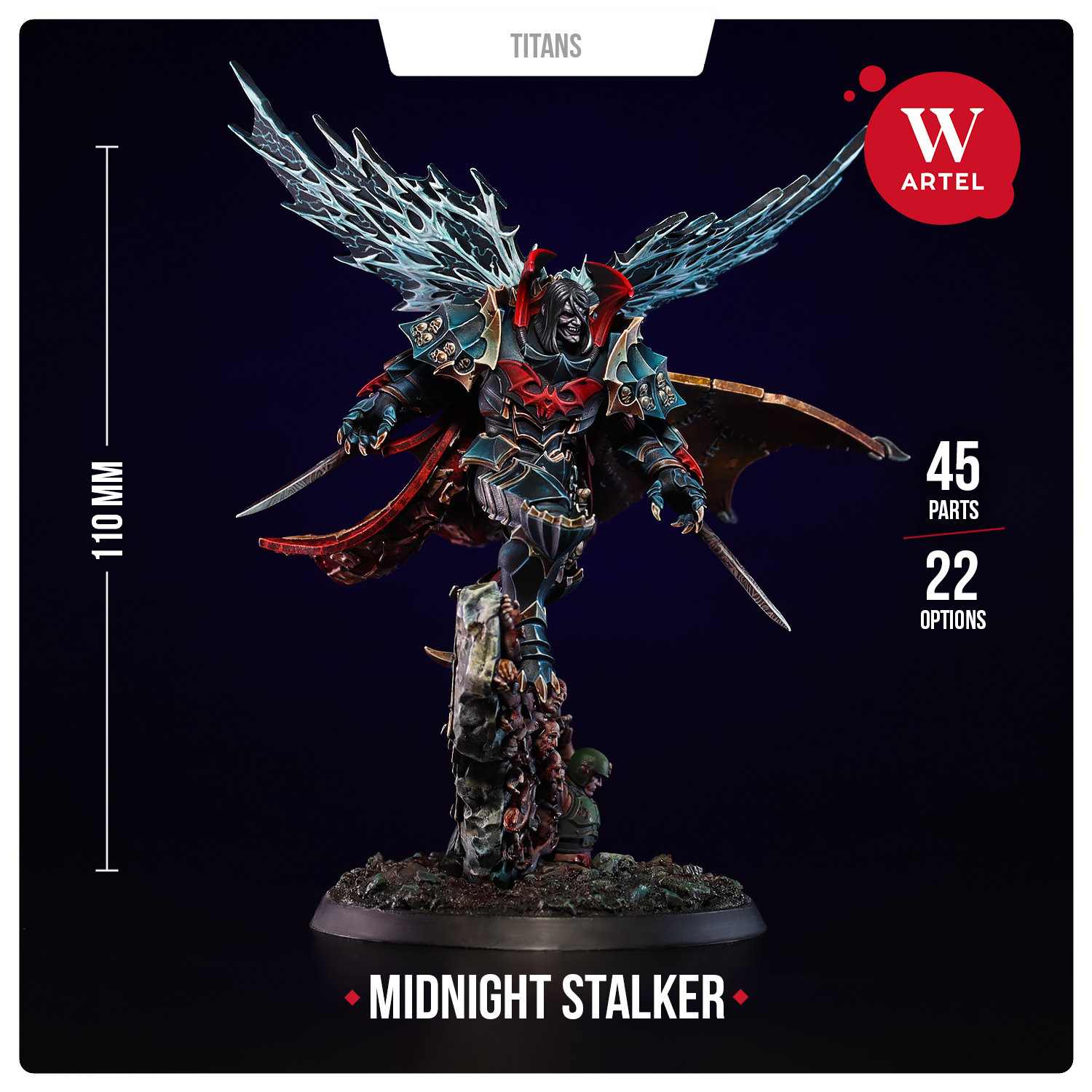
Mercy and Forgiveness
This pair of murderous artificer lightning claws, unknown in origin, which Curze favoured as his personal weapons, were given the doleful names ‘Mercy’ and ‘Forgiveness’ by the Night Lords; though what their wielder named them, if anything, remains as with so much about their master, unknown.
| Melee Weapon | |||||||
Melee Weapon | IM | AM | SM | AP | D | Special Rules | Traits |
| Mercy and Forgiveness | |||||||
| Mercy and Forgiveness | I | +2 | S | 2 | 1 | Critical Hit (5+), Shred (4+) | Power |
The Widowmakers
Based on the micro-serrated throwing blades utilised for signature kills by certain Nostraman assassin-cults, Curze favoured the use of these vicious, yet highly precise, weapons over more conventional firearms in battle, using them to disable and maim as he willed.
| Ranged Weapon | |||||||
Ranged Weapon | R | FP | RS | AP | D | Special Rules | Traits |
| The Widowmakers | |||||||
| The Widowmakers | 12 | 3 | 4 | 5 | 1 | Breaching (4+) | Assault |
The Night Lords Trait is used in the following Legiones Astartes datasheets:

A dark and haunted figure obsessed with death and judgement, unshakable in his belief in the fundamental fallibility of Mankind and the agency of fear as the only true means of controlling humanity’s failings, Konrad Curze and his Legion were shaped by the darkness of Nostramo just as much as they were by the genecraft of the Emperor, waiting in the shadows, ready to strike.
If a Model with this Special Rule is part of an Army, then the Controlling Player may apply the following additional Special Rules to all Auxiliary, Apex and Primary Detachments that have the same Faction Trait as the Model with this Special Rule:- If four or more Troops Battlefield Role Slots in the Primary Detachment of this Army are filled with Terror Squad Units and/or Assault Squad Units, then all Force Organisation Slots with the Troops Battlefield Role in the Primary Detachment are considered Prime Slots.
Furthermore, if a Model with this Special Rule is part of an Army, then the following Special Rules are granted to all Models in Terror Squad Units in the same Army:
- All Models in Terror Squad Units in this Army gain the Infiltrate (12) Special Rule.
Konrad Curze was cursed with one tiny sliver of his father’s psychic talent - he could foresee snatches of the future with limited clarity, though his control over when these visions came to him was tenuous at best.
If the Controlling Player succeeds at a Dice Roll, they may select this Gambit instead of any others normally available.When selecting Gambits for a Model with this Special Rule, its Controlling Player can roll one Dice. On a 5+, this Gambit is available to the Controlling Player to be selected for that Model:
A Death Long Foreseen
An empire in flames, a throne in a palace of nightmares and a shadowy figure wreathed in righteous anger. It all ends in horror and a short, undignified stroke of a blade. What terror can the battlefields of the present hold compared to the empty futility of the future?
When this Gambit is selected, the Controlling Player can make one Willpower Check for each of the following benefits. If the Willpower Check is successful, the corresponding effect applies until the start of the next Face-Off Step:- This Model has the Feel No Pain (5+) Special Rule.
- Modify this Model’s Attacks Characteristic by +1.
- This Model’s Mercy and Forgiveness have an Initiative Modifier Characteristic of ‘+2’.