Questoris Familia – Questoris Knight Magaera
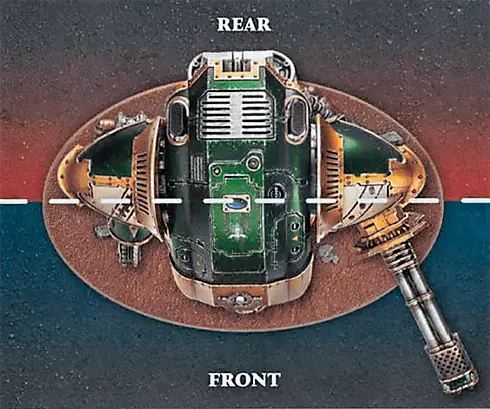
The Knight Magaera is a technological marvel rarely seen outside the vassal Houses of the Mechanicum, who jealously guard the secrets of its creation. Armed with a lightning cannon that blasts apart heavy infantry and vehicles alike and a siege claw which can breach even the strongest enemy fortifications, the Knight Magaera is often placed at the forefront of Household assaults. However, excessive levels of radiation seeping from the knight’s reactor core and the risk of catastrophic internal explosions in the event of heavy damage mean that to pilot a Knight Magaera is cause for equal celebration and lament.
| Armour | ||||||||||
| M | WS | BS | S | Front | Rear | I | A | HP | ||
| Knight Magaera (⌀170 x 109mm) | ||||||||||
| Knight Magaera (⌀170 x 109mm) | 10 | 4 | 4 | 8 | 13 | 11 | 3 | 4 | 10 | |
Warriors trained to break the foe’s lines are often at the forefront of their host, but are ill-suited to holding ground in the face of an enemy counter-attack.
A Unit that includes Models with this Special Rule can score Victory Points for destroying enemy Units.The Controlling Player of a Unit that includes a majority of Models with the Vanguard (X) Special Rule scores Victory Points equal to the value of X when:
- An enemy Unit that is within 3" of an Objective Marker, or was within 3" of an Objective Marker at the start of the Player Turn has its last model Removed as a Casualty by an attack made by that Unit.
- An enemy Unit that is within 3" of an Objective Marker, or was within 3" of an Objective Marker at the start of the Player Turn gains the Routed Tactical Status while in a Combat with that Unit.
Vile toxins, exotic radiation and all-consuming chemical agents all sap the abilities of warriors in the field even as they kill them. Most terrible are the effects of phosphex, choking the life and strength from those it touches, or the fleshcorroding properties of the dreaded life-eater virus.
Unsaved Wounds with the Phage (X) Special Rule reduce a Characteristic by 1.If an attack made for a Weapon or Model with this Special Rule inflicts one or more Unsaved Wounds on a Target Unit, then once the Shooting Attack or Initiative Step in which the Unsaved Wound was inflicted has been completely resolved, all remaining Models in the Unit that was the target of the attack must reduce the Characteristic that is the value of X for that variant of the Phage (X) Special Rule by 1 for the remainder of the Battle. Models in a Unit may have any number of different Characteristics reduced by 1 by the Phage (X) Special Rule, but no individual Characteristic may be reduced by more than 1 by the Phage (X) Special Rule no matter how many Unsaved Wounds with any variant of that Special Rule are allocated to Models in that Unit.
Poison is a subtle weapon, relying not on brute strength to bring harm to the foe, but on its own insidious bite. Though some consider it a dishonourable tool, there are many that are willing to make use of it in the name of victory.
A Weapon with the Poisoned (X) Special Rule has a chance to cause a wound regardless of the target’s Toughness.When making Wound Tests for Hits that have the Poisoned (X) Special Rule, if the result of any Dice rolled is equal to or greater than the value of X attached to the specific variant of this Special Rule then a wound is caused automatically, regardless of the Toughness Characteristic used to determine the Target Number. A Hit that has this Special Rule may still inflict a wound by passing a Wound Test as normal, instead of using this Special Rule, but never inflicts more than 1 wound if it would both pass the Wound Test and trigger the Poisoned (X) Special Rule. Wounds caused using the Poison (X) Special Rule retain the AP and Damage of the Weapon and Saving Throws and Damage Mitigation Tests may be made to discard them as normal. The Poisoned (X) Special Rule has no effect on Models that have the Vehicle Type, and limited effect on Models with the Automata or Walker Types.
In order to make a Shooting Attack for a Unit that has been selected during the Attack Sub-Phase, as part of a Reaction or for any other Rule or Sub-Phase that requires a Shooting Attack to be made, the following procedure must be followed:
As part of the Rules for conducting a Shooting Attack, the term ‘Attacking Unit’ will be used to refer to the Unit whose Models will be making attacks as part of that Shooting Attack, while the term ‘Attacking Player’ will be used to identify the Player that controls the Attacking Unit. The term ‘Target Unit’ will be used to refer to the Unit that is selected as the Target Unit for the Shooting Attack.
Volatile fuel, overpowered reactors or dangerous munitions can cause some war engines to explode when destroyed. Such explosions can prove devastating to friend and foe alike.
A Model with this Special Rule can explode and cause Hits to nearby Models and Units.Before a Model with the Explodes (X) Special Rule is Removed as a Casualty, the Controlling Player must roll a Dice. If the result of that roll equals or exceeds the value of X attached to this variant of the Explodes (X) Special Rule, the Model explodes. Every Unit with one or more Models within 6" of an exploding Model suffers a number of Hits equal to the Base Wounds Characteristic or Base Hull Points Characteristic of the exploding Model. Each such Hit has a Strength of 8, an AP of ‘-’ and a Damage of 1. Once all Hits caused by this Special Rule have been resolved, the Model with the Explodes (X) Special Rule is Removed as a Casualty as normal.
Some vehicles are either fitted with sophisticated auto-repair systems, or are simple enough in construction that their crew can effect repairs in the field. Such vehicles are able to shrug off minor damage that would otherwise reduce the fighting ability of their war machine.
A Model with this Special Rule has a bonus to Repair Tests to remove Statuses.If the Active Player makes a Repair Test in the Statuses Sub-Phase of the End Phase for a Model with the Vehicle Type with this Special Rule, they ignore the usual Target Number of 6. Instead, the value of X attached to the variant of this Special Rule is used as the Target Number for that Repair Test. For example, a Model with the Auto-repair (4+) Special Rule would pass any Repair Tests made for it on the result of a 4 or higher.
Template weapons shoot clouds of fire, gas or other lethal substances, rather than shells or bullets.
Weapons and attacks with the Template Special Rule use the Flame Template to determine how many Models they Hit.When making attacks for a Weapon or other effect that has the Template Special Rule, or otherwise uses a Template, no Hit Tests are made for the attack. Instead, when directed to make Hit Tests for such an attack, a single Template is placed to determine how many Hits are generated. A Template must be placed so that its narrow end is touching the Base of the Model, the edge of a Model’s Hull (if it has the Vehicle Type) or other point being used to make the attack, and so that no part of the Template covers or touches a friendly Model’s Base, Hull or otherwise would inflict Hits on a friendly Model. Within these restrictions, the Player making the attack may place the Template in an orientation of their choosing as long as at least one Model from the original Target Unit remains under the Template. If the Template cannot be placed under these restrictions, such as if it cannot be placed without covering or touching friendly Models, then no attack may be made.
Once the Template has been placed, a number of Hits using the profile of the Weapon or effect are inflicted on the Target Unit equal to the number of Models touched or covered by the Template. If the Weapon or attack has a Firepower Characteristic greater than 1 then only a single Template is placed, but the number of Hits inflicted per Model touched or covered by the Template is equal to the Firepower Characteristic of the attack or Weapon. If more than one enemy Unit has Models that are touched or covered by the Template in its final position, then Hits are inflicted on all such Units as noted above, Hits on Units other than the original target form a new Fire Group that must be placed to one side and used to resolve a separate Shooting Attack on the additional Target Unit once all attacks and Fire Groups from the original Shooting Attack have been fully resolved. When resolving Armour Penetration Tests for Hits inflicted by a Weapon with this Special Rule, the position of the Model that was used to make the attack is used to determine which Armour Facing is used.
Note that the Rules require a Template to be placed in Base Contact with the Model being used to make the attack, but this Model is not counted as having been Hit by the attack and does not stop the attack from being made. However, this only applies to the individual Model being used to make the attack, not to other Models in the same Unit.
Weapons with this Special Rule will have their Range Characteristic as ‘Template’. This does not count as a value of ‘0’ or ‘-’. If a Rule requires a number for the Range Characteristic then all Weapons and attacks with this Special Rule are considered to have a Range Characteristic of ‘8’.
In some rare cases a Weapon may use a different Template than the standard Flame Template, in these cases the Template Rule may be expressed with a bracketed section stating which Template must be used when attacking with that Weapon. Otherwise, the Rules for its use are unchanged from those noted under the Template Special Rule, with the exception of the Range Characteristic it is considered to have.
An example of this is the use of the Hellstorm Template for certain very large Weapons. In this case the Rule would be expressed as ‘Template (Hellstorm)’ and the attack would be resolved using the Template Special Rule, but placing the larger Hellstorm Template. Weapons with the Template (Hellstorm) Special Rule are considered to have a Range Characteristic of ‘16’ when a Rule requires such weapons to have a numbered Range Characteristic.
For example, a Legionary selected from the Imperial Fists Faction and selected as part of a Loyalist Army would have the Loyalist and Imperial Fists Traits. On their own these Traits have no effect on the Model’s Characteristics, Points cost or other features, but Rules that target Imperial Fists or Loyalist Models will apply their effects to the Model.
In addition to Models, Weapons can also have Traits. These are usually different to those possessed by Models, but are used for the same purposes. Weapons will commonly have Traits that define the type of Weapon it is or a specific type of usage. For example, a bolt pistol has the following Traits: Assault, Bolt. These identify which ‘family’ of Weapons it belongs to for any Rules that might only affect ‘Bolt’ Weapons and notes that it can be used for attacks where only ‘Assault’ Weapons may be used.
While they appear similar to Characteristics, it is important to note that Traits never have a ‘value’ attached to them. Furthermore, Traits cannot be modified in any way by another Special Rule or effect during a Battle, unless a Rule specifically states it affects a Trait.
Designed to rip and tear flesh, some weapons are fearsome and intimidating tools of warfare. Whether by the gnashing teeth of a chainblade or the jagged edges of flechette ammunition, these weapons scythe great holes in the lines of even the toughest of infantry and the largest of warriors.
Attacks made with the Shred (X) Special Rule can sometimes inflict an extra point of Damage.When any Wound Test is made for an attack with the Shred (X) Special Rule, if the result of the Dice roll, before any modifiers are applied, is equal to or greater than the value of X attached to this variant of the Shred (X) Special Rule, then if a wound is inflicted by that Wound Test, the Damage Characteristic of that wound is increased by 1. Note that the Shred (X) Special Rule may only be triggered by a Wound Test and has no effect when making an Armour Penetration Test.
A hail of enemy gunfire serves to keep any warrior’s head down, and some weapons are designed specifically to suppress the foe. Only the most steadfast of troops will continue the advance when all they can hear is the whistle and crack of gunshots and the screams of the fallen.
Weapons and other attacks that have the Suppressive (X) Special Rule have a chance of inflicting the Suppressed Status on the Target Unit.If a Shooting Attack made for a Weapon or Model with this Special Rule inflicts one or more Hits on a Target Unit, that Target Unit must make a Cool Check in the Morale Sub-Phase of the same Player Turn. If this Check is failed all Models in the Unit gain the Suppressed Status, and if the Check is passed then there is no further effect. The value of X attached to this Rule is applied as a negative modifier to the Cool Characteristic of Models in the Target Unit when making Checks caused by an Attack with this Special Rule, if the attack includes multiple Weapons with different versions of this Special Rule the modifiers do not stack - use only the greatest modifier.
Blasts of exotic radiation, malignant scrap-code or other targeted attacks can render the systems of complex war engines vulnerable without penetrating their armour. While such weapons are less likely to leave their target as a broken ruin, the deleterious effects of their attacks can render even the most powerful war machines impotent.
Weapons with the Shock (X) Special Rule have a chance of inflicting Statuses on Vehicles even if it does not penetrate their armour.When making a Hit Test for a Weapon with this Special Rule against a Target Unit that includes any Models with the Vehicle Type or Walker Type, the result of the Hit Test before any modifiers are applied must be checked. If any Hit Test for a Weapon with the Shock (X) Special Rule results in a ‘5’ or ‘6’ before any modifiers are applied, then all Models with the Vehicle Type or Walker Type in the Target Unit gain a Status at the end of Step 11 of the Shooting Attack process or Step 10 of the Initiative Step process. The Status gained is indicated by the value of X attached to that variant of the Shock (X) Special Rule. If the Model already has the stated Status or the attack would apply the Status multiple times there is no additional effect and this Special Rule never causes a Model to lose Wounds or Hull Points. Hits inflicted by a Weapon with this Special Rule must still have Wound Tests or Armour Penetration Tests made for them, and are not discarded if they trigger this Special Rule.
Designed to pierce the armour worn by heavy infantry, some weapons have gained a fearsome reputation on the battlefields of the Horus Heresy. While many such weapons are rare or temperamental in use, the sheer power of their attacks more than makes up for this.
With a Weapon that has the Breaching (X) Special Rule there is a chance that a Wound Test may result in the Wound ignoring Armour Saves.When any Wound Test is made for an attack with the Breaching (X) Special Rule, if the result of the Dice roll, before any modifiers are applied, is equal to or greater than the value of X attached to this variant of the Breaching (X) Special Rule, then if a wound is inflicted by that Wound Test, that wound becomes a ‘Breaching Wound’.
A Breaching Wound is always treated as having an AP Characteristic of 2 regardless of the Characteristics of the Weapon used to make the attack.
Some weapons trade precision for indiscriminate destruction, high explosive impacts that can devastate a wide area. From artillery shells to high energy blasts, such weapons are popular tools of destruction on the battlefields of the Horus Heresy.
Attacks made with the Blast (X) Special Rule use a Blast Marker to determine how many Hits are caused.When making attacks with a Weapon that has the Blast (X) Special Rule, before any Hit Tests are made, a Blast Marker must first be placed to determine how many Hits may be inflicted by the attack. The Player making the attack must place the Blast Marker indicated in brackets as part of the Special Rule so that the hole in the middle is entirely over the Base of any one Model in the Target Unit. Once the Blast Marker has been placed, the Player making the attack must make a Hit Test for the attack, and each Model from the Target Unit that is fully or partially under the Blast Marker will suffer 1 Hit if the Hit Test is successful.
If any Models from Units other than the Target Unit are fully or partially covered by the Blast Marker, then a new Fire Group must be created for those Hits and set to one side. Continue resolving the Shooting Attack on the original Target Unit, and once that Shooting Attack has been completely resolved begin a new Shooting Attack to resolve those additional Fire Groups generated for Units other than the original Target Unit.
If the Hit Test is unsuccessful then no Hits are inflicted and the Player making the attack must make a Scatter Roll for the Blast Marker. Once a Scatter Roll has been made for the Blast Marker and it has been moved, one Hit is inflicted on a Unit for each Model from that Unit that is wholly or partially covered by the Blast Marker.
Hits can be scored on both friendly and enemy Units by attacks using the Blast (X) Special Rule. Hits inflicted by Weapons with the Blast (X) Special Rule are allocated in the same manner as other Hits, regardless of which actual Models were under the Blast Marker and the Blast Marker may not be used to inflict Hits on specific Models.
If a Fire Group includes multiple attacks made with the Blast (X) Special Rule, do not place multiple Blast Markers. A single Blast Marker is placed using the Rules detailed above, and a Hit Test is made for each attack in that Fire Group. For each successful Hit Test, one Hit is inflicted for each Model from the target Unit that is fully or partially under the Blast Marker. If any Hit Tests are unsuccessful then, after any Hits made by successful Hit Tests are counted, a single Scatter Roll is made for the Blast Marker, regardless of the total number of unsuccessful Hit Tests. For each Hit Test that was unsuccessful, one Hit is inflicted on a Unit for each Model from that Unit that is wholly or partially covered by the Blast Marker after the Scatter Roll has been resolved.
Some weapons are so terrifyingly potent that their use instils abject fear in even the most strong-willed warriors. In the face of such wanton power the target can only flee or prepare for death, for few would live to tell of the true horrors of the Age of Darkness once they were unleashed on the battlefield.
Weapons and other attacks that have the Panic (X) Special Rule have a chance of inflicting the Routed Status on the Target Unit.If a Shooting Attack made for a Weapon or Model with this Special Rule inflicts one or more wounds on a Target Unit, regardless of whether any Damage is inflicted, that Target Unit must make a Leadership Check in the Morale Sub-Phase of the same Player Turn. If this Check is failed then all Models in the Unit gain the Routed Status, if the Check is passed then there is no further effect. The value of X attached to this Special Rule is applied as a negative modifier to the Leadership Characteristic of Models in the Target Unit when making Checks caused by an attack with this Special Rule. If the attack includes multiple Weapons with different versions of this Special Rule the modifiers do not stack - use only the greatest modifier.
Some weapons are designed to crack armour and deal massive damage to internal components of armoured fighting vehicles. Few tanks can withstand the firepower of such weapons for long.
Attacks made with the Armour-breaker (X) Special Rule can sometimes inflict an extra point of Damage.When any Armour Penetration Test is made for an attack or Model with the Armour-breaker (X) Special Rule, and it results in a Penetrating Hit - roll a Dice. If the result of that Dice roll is equal to or greater than the value of X attached to this variant of the Armour-breaker (X) Special Rule, then the Damage Characteristic of that Penetrating Hit is increased by 1. Note that the Armour-breaker (X) Special Rule may only be triggered by an Armour Penetration Test and has no effect when making a Wound Test.
The [Allegiance] Trait is used in the following Questoris Familia datasheets:
The [Questoris Familia] Trait is used in the following Questoris Familia datasheets:
This datasheet has Lords of War Battlefield Role. Full list of Questoris Familia units sharing same Battlefield Role follows:
For example, a Land Raider Carrier has a Hull (Front) Mounted twin heavy bolter - this Weapon may only attack targets in the Front Firing Arc.
Lightning cannon
| Ranged Weapon | |||||||
Ranged Weapon | R | FP | RS | AP | D | Special Rules | Traits |
| Lightning cannon | |||||||
| Lightning cannon | 36 | 1 | 7 | 3 | 2 | Blast (5"), Shred (5+), Breaching (5+), Suppressive (1) | Arc |
Phased plasma-fusil
| Ranged Weapon | |||||||
Ranged Weapon | R | FP | RS | AP | D | Special Rules | Traits |
| Phased plasma-fusil | |||||||
| Phased plasma-fusil | 24 | 3 | 5 | 3 | 1 | Breaching (5+) | Plasma |
Irad-scourer
| Ranged Weapon | |||||||
Ranged Weapon | R | FP | RS | AP | D | Special Rules | Traits |
| Irad-scourer | |||||||
| Irad-scourer | Template | 1 | 5 | 4 | 2 | Template, Panic (2), Phage (T), Poisoned (2+), Breaching (6+) | Rad |
Hekaton siege claw
| Melee Weapon | |||||||
Melee Weapon | IM | AM | SM | AP | D | Special Rules | Traits |
| Hekaton siege claw | |||||||
| Hekaton siege claw | -1 | A | x2 | 3 | 3 | Armour-breaker (4+), Breaching (4+), Shock (Pinned) | Power |
Ionic flare shields combine the unique technology of the knights’ ion shields with elements from the various flare shield systems of the Mechanicum, resulting in shielding systems with analogous performance and function compared to standard ion shields but with an increased ability’ to counteract the high-energy blasts typical of anti-armour weapons.
Ionic flare shields provide a different Invulnerable Save against Shooting Attacks made against a Model’s Front and Rear Facings, including against Glancing Hits, and nullify the effect of the Armourbane Special Rule on any Shooting Attacks made against the Model.When making Armour Penetration Tests against a Model with an ionic flare shield, no Weapon may make use of the Armourbane Special Rule.
A Model with an ionic flare shield has a 5+ Invulnerable Save against Shooting Attacks made against its Front Facing and a 6+ Invulnerable Save against Shooting Attacks made against its Rear Facing. Additionally, a Model with an ionic flare shield may have Invulnerable Saves made for it against any Glancing Hits it has suffered in Step 11 of a Shooting Attack, before any rolls on the Vehicle Damage Chart are made, discarding a single Glancing Hit for each successful save.